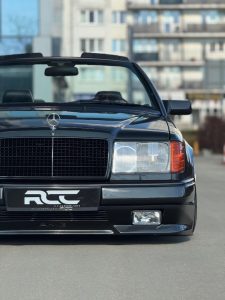
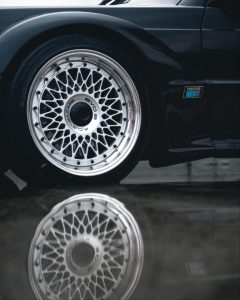
An engine swap is the ultimate step in mechanical tuning. It is the moment when we stop chasing small horsepower gains through intake upgrades or ECU tuning and instead install an entirely new heart into the body of the car. At R Custom Cars, we know that a professional engine swap is far more than simply “fitting” an engine under the hood — it is a complex engineering process that affects the vehicle’s balance, electronics, and overall safety. Before making such a decision, it is important to understand the challenges that arise where mechanics and physics meet.
Choosing the Right Engine
The first and most important aspect is selecting the right power unit. This decision should not be based solely on dreams of huge horsepower figures, but primarily on the intended purpose of the car. A drift project requires a different type of engine — one focused on torque and durability — than a lightweight track-day build, where weight distribution and handling precision are crucial. At R Custom Cars, we often recommend proven platforms such as the JZ, LS, or K-Series engines because the aftermarket support for these platforms is enormous, making both the build process and future maintenance significantly easier. Remember: an engine that produces 500 horsepower “on paper” may become a nightmare to install if it is an exotic or uncommon unit with limited support.
Mechanical Integration
Once the engine is selected, the next challenge is mechanical integration — connecting the new powertrain to the chassis and drivetrain. Factory engine mounts almost never fit the replacement engine, which means custom mounts must be designed and fabricated to withstand extreme stress and torque. Transmission compatibility is equally important. In some projects, we retain rear-wheel drive in a vehicle originally designed as front-wheel drive, or combine an engine from one manufacturer with a transmission from another. This requires precision laser-cut adapter plates, custom driveshafts, and axle modifications. At R Custom Cars, we ensure that every component is properly balanced and tested, because even the slightest vibration at high RPM can lead to catastrophic failure.
Electronics and Engine Management
The biggest challenge in modern engine swaps is electronics. The days when an engine could run with just a few wires and fuel are long gone. Modern engines communicate with dozens of sensors, ABS systems, traction control modules, and even dashboards through CAN bus systems. Installing a modern engine into an older chassis often requires replacing the factory ECU with a standalone engine management system such as an EMU Black. This allows full control over fuel delivery, ignition timing, and boost pressure, but it also requires building a completely custom wiring harness from scratch. This is one of the most time-consuming aspects of a project at R Custom Cars, where precision wiring determines the long-term reliability of the build.
Supporting Systems
Supporting systems must also be upgraded to handle the increased power. A factory radiator designed for a small 1.6-liter engine will not be capable of cooling a turbocharged V8. Engine swaps often require fully custom cooling systems with larger radiators, upgraded fans, and additional oil coolers. The same applies to the fuel system — larger injectors require higher-flow fuel pumps and upgraded fuel lines. The exhaust system must also be custom-built to maximize flow while still fitting within the chassis tunnel, which frequently requires handcrafted stainless-steel fabrication.
Handling and Braking
The final — and often overlooked — aspect of an engine swap is handling and braking performance. Installing a heavier engine changes the car’s center of gravity, which means the suspension setup must be adjusted with stiffer springs, revised damper settings, and updated wheel alignment geometry. Most importantly, as power increases, braking capability must improve as well. At R Custom Cars, we always recommend pairing an engine swap with larger brake discs and multi-piston calipers. Building a powerful car is not only about acceleration — it is equally about the ability to stop safely and confidently.
An engine swap is an investment that completely redefines a vehicle. When done professionally, it delivers a driving experience no factory car can truly replicate. However, it also requires respect for engineering principles and the level of experience necessary to execute every detail correctly — something we bring to every project at R Custom Cars.